Blog
Hawaiian Pizza: A Sweet and Savory Classic
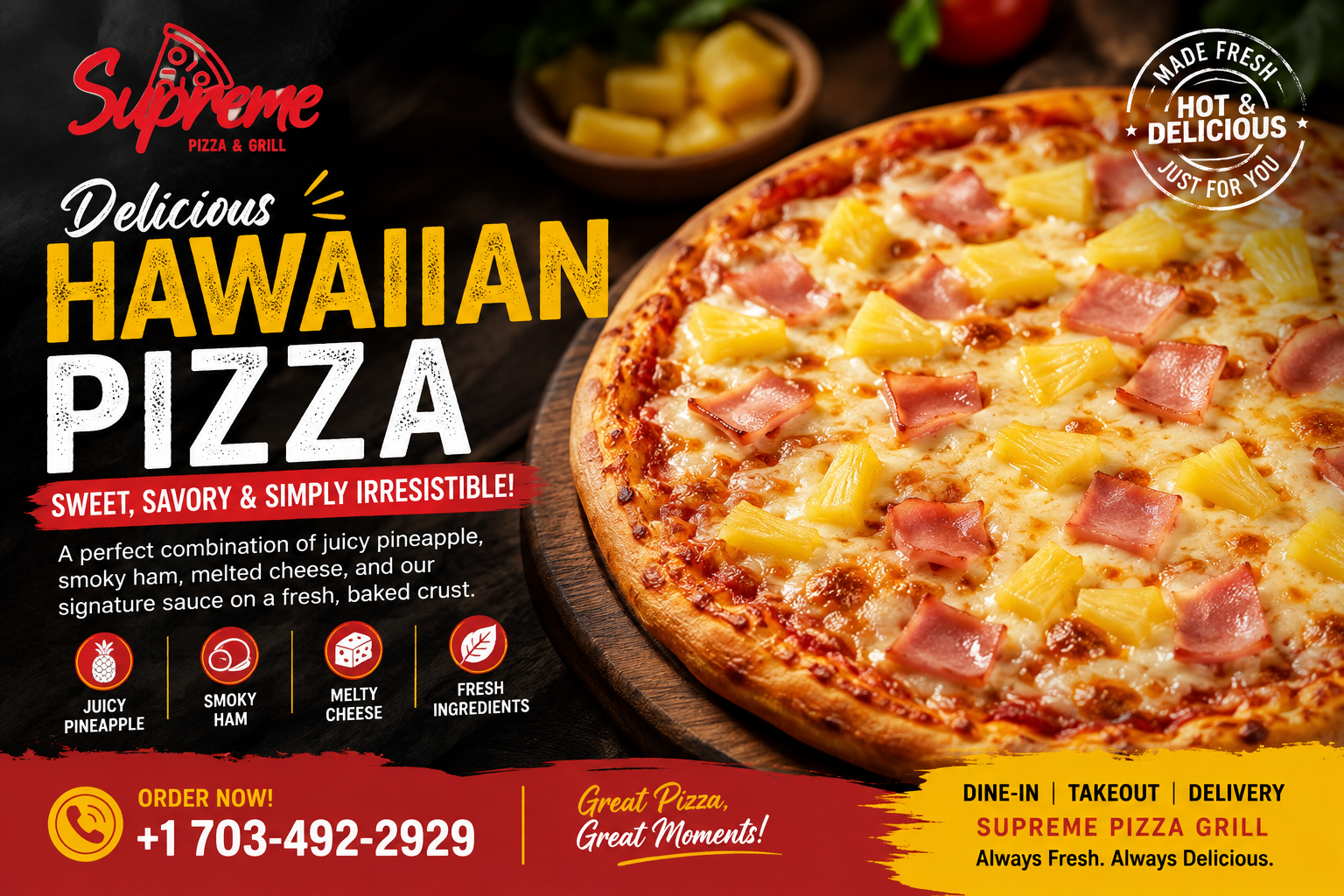
Hawaiian Pizza is a popular sweet-and-savory pizza made traditionally with tomato sauce, mozzarella cheese, ham, and pineapple. Its combination of juicy pineapple and salty meat creates a contrast that has made this pizza a familiar choice on menus around the world.
Despite its tropical name, Hawaiian Pizza did not originate in Hawaii. The pizza is generally credited to Greek-Canadian restaurateur Sam Panopoulos, who experimented with canned pineapple on pizza at the Satellite Restaurant in Chatham, Ontario, in 1962. The name was associated with the Hawaiian brand of canned pineapple used at the time.
Today, Hawaiian Pizza remains one of the most recognizable pineapple pizza varieties. Some people enjoy its sweet and salty combination, while others prefer more traditional savory toppings. Either way, it has become an important part of modern pizza culture.
What Is Hawaiian Pizza?
Hawaiian Pizza is a pizza that combines savory ingredients with sweet pineapple. The classic version usually includes:
- Pizza dough
- Tomato pizza sauce
- Mozzarella cheese
- Ham
- Pineapple
The pineapple can be fresh or canned, although canned pineapple has a long connection with the original version. The fruit adds sweetness, moisture, and a slightly tangy flavor, while ham contributes saltiness and a savory taste.
The appeal of Hawaiian Pizza comes largely from contrast. Instead of every topping having a similar flavor profile, the ingredients create different tastes in every bite.
For people who enjoy sweet-and-savory foods, that contrast can make Hawaiian Pizza an easy choice for lunch, dinner, parties, or casual gatherings.
Hawaiian Pizza History
The history of Hawaiian Pizza is more Canadian than Hawaiian.
In 1962, Sam Panopoulos and his brothers operated the Satellite Restaurant in Chatham, Ontario. Panopoulos had experience serving American-style food and Chinese dishes, and he became interested in experimenting with pizza toppings.
According to historical accounts, Panopoulos added canned pineapple to pizza as an experiment. Sweet-and-savory combinations were already familiar through some Chinese-inspired dishes served at the restaurant, which helped inspire the unusual topping combination.
The idea eventually became associated with ham and pineapple. Although pineapple on pizza was initially unconventional, the combination spread to restaurants beyond Canada and eventually became a widely recognized pizza style.
The name Hawaiian did not mean that the pizza was created in Hawaii. Historical accounts connect the name to the canned pineapple brand used for the original experiment.
This origin story is one reason Hawaiian Pizza continues to generate interest beyond its ingredients. It represents a simple food experiment that became part of international pizza culture.
Why Does Hawaiian Pizza Taste So Good?
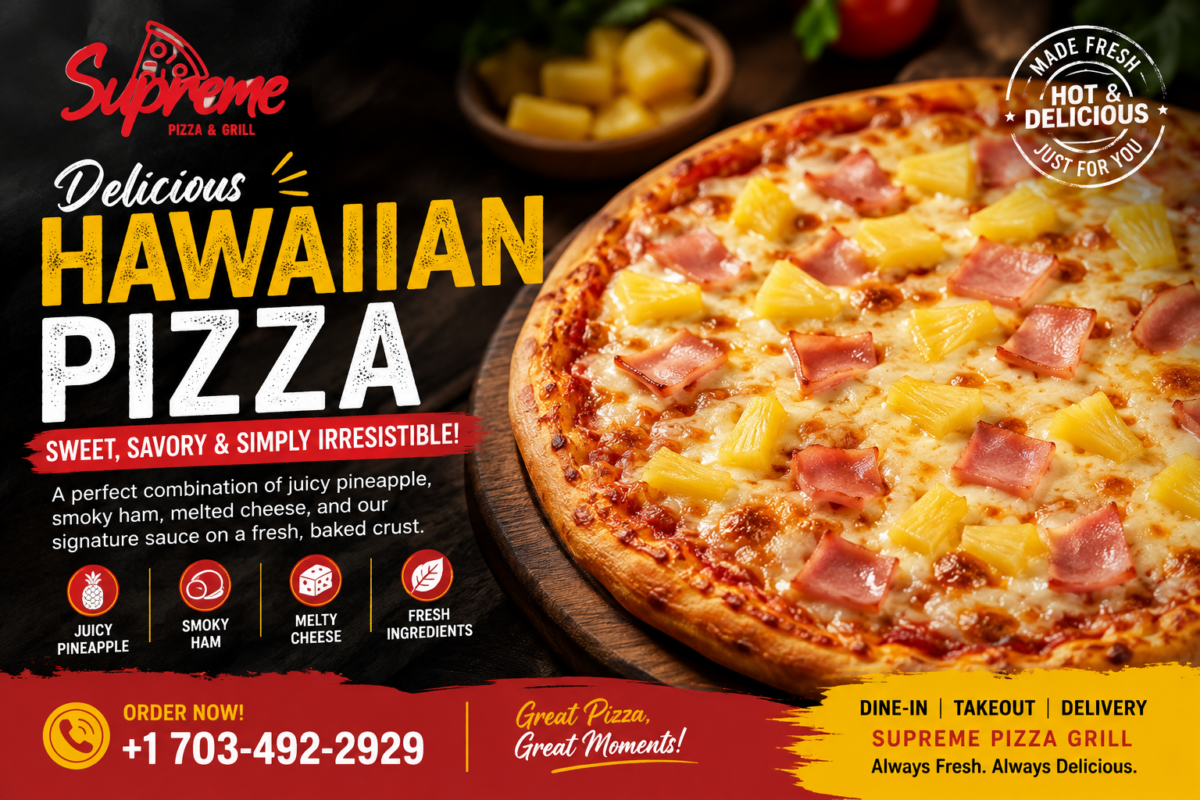
The main appeal of Hawaiian Pizza is the balance between sweet and savory flavors.
Pineapple provides sweetness and acidity, while ham delivers saltiness and a savory character. Tomato sauce adds acidity, mozzarella contributes creamy richness, and the crust provides a toasted, slightly chewy foundation.
When baked together, these ingredients create several textures and flavors at once.
The pineapple also changes during baking. Its juices become warmer and more concentrated, while the cheese melts around the toppings. When properly balanced, the fruit does not have to overpower the pizza.
This is also why the amount of pineapple matters. Too much can make a pizza overly sweet or wet, while a moderate amount allows the ham, cheese, sauce, and crust to remain noticeable.
What Goes on Hawaiian Pizza?
A traditional Hawaiian Pizza generally uses ham and pineapple, but modern pizzerias may customize the recipe with additional ingredients.
Common additions include:
Bacon
Bacon adds a smoky, salty flavor that works naturally with pineapple. It can create a richer version of the classic ham-and-pineapple combination.
Jalapeños
Jalapeños introduce heat that contrasts with pineapple’s sweetness. This is a useful option for people who enjoy spicy pizza.
Red Onion
Thinly sliced red onion adds mild sweetness and a crisp texture while contributing another layer of flavor.
Extra Cheese
Additional mozzarella creates a richer cheese layer and can soften the contrast between the salty meat and sweet fruit.
Chicken
Chicken can replace or accompany ham for a different take on pineapple pizza. Grilled or seasoned chicken works particularly well with the fruit.
The key is balance. Hawaiian Pizza does not need a large number of toppings to be flavorful.
Fresh Pineapple vs. Canned Pineapple
Both fresh and canned pineapple can work on pizza, but they behave somewhat differently during baking.
Fresh pineapple can provide a brighter fruit flavor and firmer texture. It should be prepared carefully so excess moisture does not make the pizza soggy.
Canned pineapple is convenient, consistent, and closely connected to the historical version of Hawaiian Pizza. It should be drained well before being placed on the pizza.
For either option, controlling moisture is important. A pizza with too much pineapple juice can lose some of the crispness of its crust.
According to USDA SNAP-Ed nutritional information, one cup of pineapple chunks contains vitamin C along with carbohydrates, natural sugars, and dietary fiber. However, the nutritional profile of a complete Hawaiian Pizza also depends on the crust, cheese, meat, portion size, and other ingredients.
How to Make Hawaiian Pizza at Home
Making Hawaiian Pizza at home is straightforward.
Start with prepared pizza dough or homemade dough. Spread a moderate layer of tomato sauce across the surface, leaving a small border around the edge. Add shredded mozzarella, followed by diced or sliced ham and well-drained pineapple.
Bake the pizza in a properly heated oven until the crust is cooked and the cheese is melted and lightly browned.
For better texture:
- Drain pineapple thoroughly before using it.
- Avoid covering the entire pizza with a thick layer of toppings.
- Preheat the oven before baking.
- Use enough sauce to add flavor without soaking the dough.
- Allow the pizza to rest briefly before slicing.
These simple steps help maintain a crisp crust while allowing the toppings to cook evenly.
Is Hawaiian Pizza Actually from Hawaii?
No. Hawaiian Pizza is generally considered a Canadian creation.
Sam Panopoulos is credited with introducing pineapple on pizza at his restaurant in Chatham, Ontario, in 1962. The name Hawaiian came from the canned pineapple brand associated with the pizza rather than from the dish’s place of origin.
The distinction is useful because the name can easily create the impression that Hawaiian Pizza is a traditional Hawaiian dish. It is better understood as a North American pizza creation inspired by the growing popularity of pineapple and sweet-and-savory food combinations.
Is Pineapple on Pizza Good?
Whether pineapple belongs on pizza ultimately comes down to personal taste.
People who enjoy sweet-and-savory combinations often appreciate Hawaiian Pizza because pineapple creates a noticeable contrast with salty ham and melted cheese. Those who prefer entirely savory pizzas may find the fruit unusual.
There is no universal rule that determines which toppings should or should not be used. Pizza has evolved through regional ingredients, restaurant experimentation, and changing customer preferences.
That flexibility is part of what makes pizza so adaptable. Hawaiian Pizza simply takes that idea in a sweeter direction.
Hawaiian Pizza at Supreme Pizza Grill
At Supreme Pizza Grill, Hawaiian Pizza can be presented as a flavorful option for customers who enjoy the combination of savory toppings and pineapple sweetness.
A well-prepared Hawaiian pizza starts with a properly baked crust, balanced sauce, melted cheese, quality toppings, and carefully portioned pineapple. The goal is to let each ingredient contribute to the overall flavor instead of allowing one topping to dominate.
Whether you already enjoy pineapple pizza or are trying it for the first time, Hawaiian Pizza offers a familiar combination with a different flavor profile.
FAQ
What is Hawaiian Pizza made of?
Hawaiian Pizza is traditionally made with pizza dough, tomato sauce, mozzarella cheese, ham, and pineapple. Some versions also include bacon, chicken, jalapeños, onions, or additional cheese. The defining combination is the pairing of pineapple with a savory pizza base and usually ham.
Why is it called Hawaiian Pizza?
Hawaiian Pizza is generally associated with Sam Panopoulos, who introduced pineapple on pizza in Ontario, Canada, in 1962. The name is linked to the Hawaiian brand of canned pineapple used for the experiment, rather than the pizza originating in Hawaii.
Is Hawaiian Pizza actually from Hawaii?
No. Hawaiian Pizza is generally credited to Sam Panopoulos and the Satellite Restaurant in Chatham, Ontario, Canada. The pizza became known as Hawaiian because of the canned pineapple brand used at the time. Its name therefore refers to the product used, not its geographic origin.
What toppings go well with Hawaiian Pizza?
Hawaiian Pizza already combines sweet pineapple with savory ham and melted cheese, but additional toppings can change its flavor. Bacon adds smokiness, jalapeños provide heat, red onion adds texture, and chicken creates another savory option. The most important consideration is keeping the toppings balanced.
Conclusion
Hawaiian Pizza stands out because it brings together flavors that are noticeably different but complementary. Sweet pineapple, salty ham, melted mozzarella, tomato sauce, and a baked crust create the familiar combination that has remained popular for decades.
Its history is equally interesting. Although its name suggests Hawaii, the pizza is generally traced to a restaurant experiment in Ontario, Canada, in 1962. From that simple experiment, Hawaiian Pizza became a recognizable menu item across many countries.
If you enjoy the sweet-and-savory combination, try Hawaiian Pizza at Supreme Pizza Grill and discover why pineapple continues to have a place on the pizza menu.
Related Posts
Turkey Sub: A Fresh, Flavorful Sandwich for Any Occasion
-
Posted by
addone
Roll with Fries and Soda: A Complete Meal in One Order
-
Posted by

Chicken Fajita Pizza: A Flavorful Guide to a Mexican-Inspired Pizza Favorite
-
Posted by
Grilled Chicken Salad: A Fresh, Flavorful Meal Guide
-
Posted by

Ham and Cheese Sub: A Simple Classic Done Right
-
Posted by

BBQ Chicken Pizza: A Flavorful Guide to the Sweet, Smoky Classic
-
Posted by

Four Toppings Pizza: Why This Combination Works
-
Posted by
Chicken Tikka Pizza: A Delicious Fusion of Two Favorites
-
Posted by

Roll With Fries & Soda: A Complete Guide to a Satisfying Meal
-
Posted by
Pizza Steak Sub: A Flavorful Guide to Steak Sub Sandwiches
-
Posted by
Malai Botti Pizza: A Creamy Pizza Everyone Loves
-
Posted by
Grilled Chicken Roll: A Fresh and Flavorful Meal for Any Time
-
Posted by